|
|
|
|
||
The History of Mahjong game can only be traced back to
the latter part of 1890 in the area of Ning Po (China). As the game spread
through China different regions adopted the game, each with its own unique
set of rules. Shortly after the First World War, an America resident in
Shanghai, Joseph Babcock, published the game manual together with the
suggestion of the British engineer named Walker to add Arabic numbers to
the tiles/mahjong to distinguish each tile and make the game easier to
play. |
||
|
Consist of
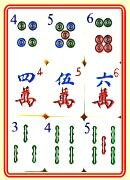
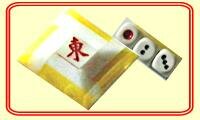
144 titles in total plus a wind indicator and 3 dice.
|
||
|
|
|
|||
|
|
||||
|
|
||||
|
|
||||
|
|
||||
|
|
||||
|
|
||||
|
|
||||
|
|
||||
|
|
||||
|
|
||||
|
|
||||
|
|
||||
|
|
||||
|
|
|
||||
Pre-agreed
rules before the game start - such as the maximum number
of points ("Fan") of the Winning
hand ("Mahjong" or "Sheek-Woo") and the
special hands. |
|||||
|
|
|||||
| 4
|
|||||
|
|
|||||
Collect 4 sets of
either "Pung", "Sheung" or "Kong" and
must
have a pair of same tiles known as "Ngan" to
win "Sheek-Woo" or "Mahjong" except the special
hands. |
|||||
|
|
|||||
|
Set of 3 identical
tiles from any suits, dragons or winds.
|
|||||
|
A run of 3 tiles from same
suit. |
|||||
|
4
identical tiles from any suits, dragons or winds
|
|||||
|
|
|
|||
|
36 inches square table
is the ideal size. |
||||
|
|
||||
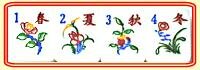
136 tiles only excluding 4 flower tiles and 4 season titles . |
||||
|
|
||||
|
|
|
||
|
|
Minimum length of play:- |
||
|
|
|
|||
The
"Jong" (player
throws the dice) is always in the East position, the right
hand side is South position (Lower-Player), opposite is West and to the left is
North (Upper-Player).
|
||||
|
|
||||
|
|
|
|
|||
| a) |
The
position of the players is denoted by "Directions" counting
anti-clockwise starting from East through South, West and North.
|
||||
|
|
|||||
| b) |
When one player
(except the "Jong")
wins ("Mahjong" or "Sheek-Woo")
the Lower Player will become "Jong"
and the players' position rotates relatively:- |
||||
|
|
|||||
| c) | If the "Jong"
wins the game
("Mahjong" or "Sheek-woo"), the position remains the same and start
a new game. |
||||
|
|
|
|||||
|
Throws three dice into the "Well"
after building the walls. |
||||||
| a) |
Decide
the starting position:-
|
|||||
|
|
|
|||||
|
When the dice
"throwing sequence"
returns to the starting position again after a Round (each round goes through East, South, West and North Position), the name of next Round will be South Round, subsequently
followed by West and North. |
||||||
| b) |
Picking of the
titles:-
Based on the total of dice equal to 4. (see diagram below) |
|||||
|
||||||
|
|
(1) Counting
anti-clockwise from the
"Jong"
(East), the sum of the dice would end at the Upper Player's position
(North).
|
||||
|
|
|||||
|
(5) The"Jong"
(East) has 14 tiles, the rest of the players have 13 tiles each. (see
diagram below)
|
|||||
|
|
|||||
(6) Special
case:-
If the sum of the dice is 17
|
|||||
|
|
|||||
|
|
c) |
The
"Jong" (East) discards one unwanted tile face
up in the "Well", then Lower Player
(South) picks up one tile (see S in diagram below ) and throws one unwanted
tile into the "Well".
|
|||
|
|||||
| d) |
The unwanted tile may be good for one player to
make up a set as in the following way:
|
||||
|
|
(1)
"Pung"
(3 identical tiles)
|
||||
"Pung"
is shouted out, collect the tile from the "Well"
put three identical tiles face up, place them at his/her corner and throw out one unwanted
tile. (Any players can claim) "Pung "
|
|||||
|
(2) "Sheung"
(a run of 3 tiles in same suit)
|
|||||
| "Sheung" can only be allowed for the
Lower Player (South) to pick up
in order to make up a run in the same suit.
When"Sheung" is called, player shows three tiles and throws one unwanted tile. |
|||||
| (3)
"Kong"
(4 identical tiles)
|
|||||
If the player has 3 identical tiles in hand
which match the unwanted tile, "Kong"
is shouted, put four tiles face up, place them at his/her corner, and then
pick one tile from the very end of the "Wall"
then discard one unwanted tile. Any player can have "Kong"
regardless of their position.
|
|||||
|
(4) If a player wants the unwanted tile to win "Mahjong"
or "Sheek-Woo",
then he/she have priority to win regardless of other players "Pung",
"Kong"
or "Sheung".
|
|||||
|
(5)
Priority
|
|||||
|
"Kong"
has priority over "Sheung".
"Pung" has priority over "Sheung". |
|||||
|
|
e) |
If the unwanted tile is not useful to any
player,
the next player will pick up one tile from the "Wall",
rearranges the tiles and throws one unwanted tile. Then followed by the next
player.
|
||
| f) |
A game is finished when someone
wins "Sheek-Woo"
or "Mahjong"
If "Jong" wins the game, the position remain the same. If other player win ("Sheek-Woo" or "Mahjong"), the lower position will become the "Jong", then throws dice and the rest of the position will shift relatively. |
|||
| g) |
When there are only 14 tiles
(7 blocks) left on the "Wall", the game has to be repeated with the same "Jong"
and "Direction" positions.
|
|||
|
|
|
|||
| a) |
Every winning hand must have a pair of "Ngan"
(2 identical tiles) and any combination of "Pung",
"Sheung"
or "Kong"
except the Special hands. Player could pick up
a winning tile from other player's unwanted tile to win "Sheek-Woo"
or "Mahjong"
|
|||
| b) |
If two players are after the same tile to win "Sheek-Woo"
or "Mahjong", the Lower Player to the player who throws the
unwanted tile will take precedence.
|
|||
|
|
|||
If a
player discovers too many or too few tiles in hand, then it is considered as
dead hand. The player cannot win this game "Sheek-Woo"
or "Mahjong" and must continue to play until the game is finished.
|
|||
|
|
||||
| a) |
Each
player has 200 chips to start, each chip represents one point.
|
|||
| b) |
The player who discards the winning tile has to
pay double points in comparison to the rest of the players. |
|||
| c) |
If the player picks a winning tile from
the "Wall", every player
has to pay double points.
|
|||
|
Happy Mahjonging
|
|
|
|
|

|
|
|
|