|
|
|
|
|
|
|
|
|
|
|
|
|
|
|
|
|
|
 |
|
 HISTORY HISTORY |
||
|
The main features of Chinese Opera are a spectacle of song and dance which, together with the colorful costumes, make-up, acrobats, jesters, storytellers, acting, poetry and martial arts combine to present the Opera in a very attractive way. |
||
| Costumes |
||||
|
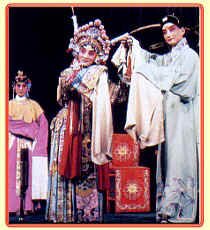
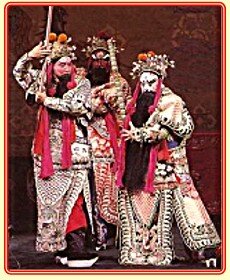
The majority of the Operatic Clothing design came from the Ming Dynasty (A.D. 1368 -1644). The magnificent embroideries, the gorgeous headdresses, the jeweled girdles for the men, the hair ornaments for the women, the high court shoes which help to increase the height of the performers and the different styles of face painting are the most attractive features people would like to explore. |
||||
|
|
|
|||
 |
|
| Face Painting |
|||||
|
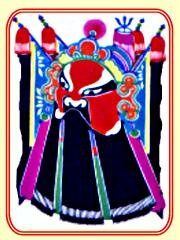
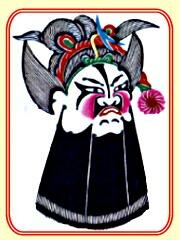
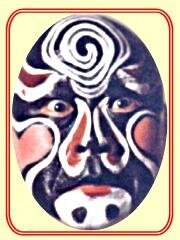
This is probably one of the most fascinating arts in connection with stage costumes as each painted face has a special meaning to knowledgeable theater-goers. |
|||||
|
|
|||||
|
|
Redder: Courage, loyalty and straight forwardness Blacker: Impulsiveness Bluer: Cruelty Whiter: Wickedness White Nose: Joviality |
||||
|
|
|
|
|||
|
|
|
||||
| Western Audiences |
||
|
Chinese opera has little in common with Western opera, and the screeching falsetto of the singers, the loud clacking of the clappers and the noisy banging of drums and cymbals can sound strange to Western ears. But it is the costumes, variety of facial expressions, the actors' eye expressions and martial arts movements that mostly attract Western audiences. |
||
|
|
|
|